Key Highlights
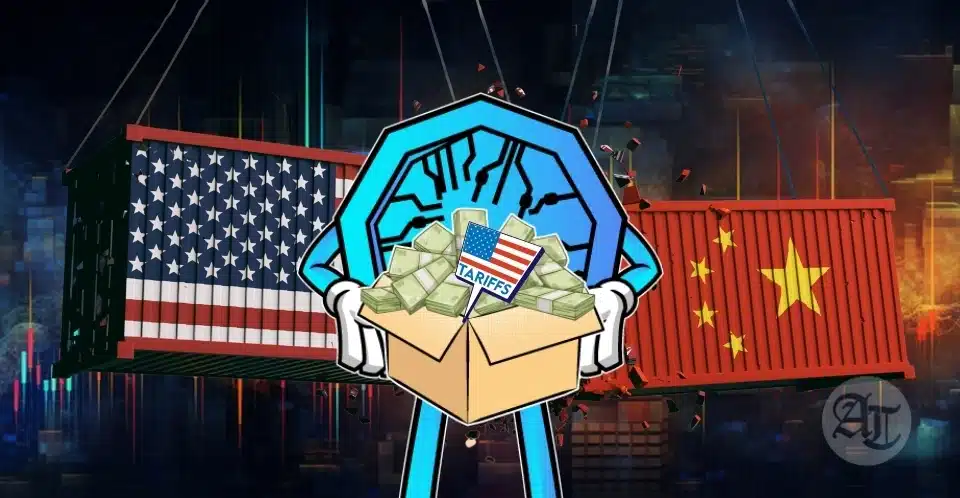
- CleanSpark is contesting US Customs’ claim that some mining rigs were made in China which could trigger $185M in tariffs.
- Another miner, IREN, faces similar $100M dispute, signalling tougher checks amid US-China trade tensions.
- The fight is reshaping the bitcoin mining hardware supply chain, with higher costs, delays, and new US-based production.
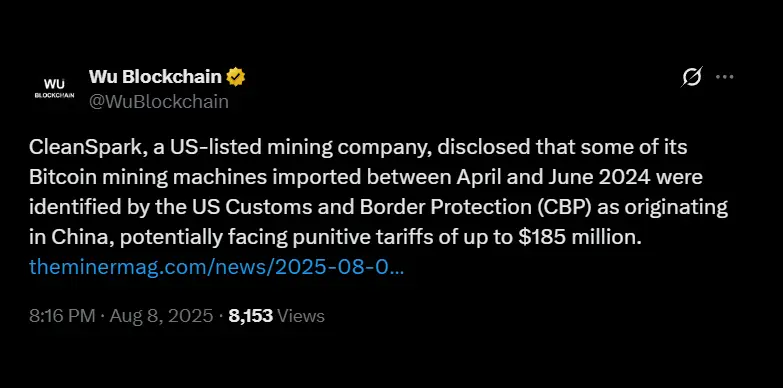
CleanSpark, a US-listed bitcoin mining firm, disclosed in its Q2 2025 filing that some of its mining rigs imported between April and June 2024 were flagged by US Customs and Border Protection (CBP) as being made in China. If the CBP is right, the company could face up to $185 million in tariffs. CleanSpark says that’s wrong , pointing to paperwork and assurances from outside China, as agreed in contracts. These rigs were all Bitmain Antminers, the only brand in its fleet at the time.
Company Denies Claims, Points to Supplier Proof
The company has not booked any potential tariff costs in its accounts, saying it does not expect to pay out. CleanSpark also says it will fight the CBP’s claim hard.
Another US miner, IREN, is battling a $100 million tariff dispute over similar accusation for equipment imported between April 2024 and February 2025. Like CleanSpark, IREN disputes the CBP’s Notice of Action.
No Tariff Costs Recorded-Yet
These cases signal tougher US customs check ins where crypto mining gear is really made, as a part of ongoing US-Chain trade tensions. The dispute traces back to tariffs introduced under the Trump administration, including a 25% duty on certain tech products under Section 301 of US Trade Act. Since China dominates bitcoin mining machine production through companies like Bitmain, Canaan, and MicroBT, some have started making rigs in the US to doge these costs.
The tariff fight has affected the crypto mining supply chain, customs are holding Chinese-made machines for longer, costs are climbing, and operations are getting disrupted. Security concerns over Chinese tech, including AI chips, add more pressure.
In response, several things have happened:
- Chinese manufacturers like Bitmain, have started building production facilities in the US to avoid tariff and speed up deliveries.
- US miners are facing higher operating costs and logistical headaches, which cut into profits.
- Some suppliers have been accused of underreporting shipment values to customs to dodge high tariffs. But with enforcement tightening, that strategy is becoming riskier.
This tug-of-war over mining machines is not just about money, it is shaping the future of the bitcoin mining industry. If CleanSpark loses its case, it could be on the hook for nearly $200 million. If they win, it sends a signal that CBP’s origin claims won’t go unchallenged. Either way, the industry will be watching closely.
IREN Faces Similar $100 Million Battle
For now, CleanSpark is holding its ground. They are confident in their records, confident in their agreements, and confident they can provide their imports did not come from China. But with IREN fighting a similar battle, and customs showing no signs of easing up, miners across the US are bracing for more of these disputes.
The bigger picture? The US-China tariff war, once just about steel, cars and soybeans, is now reshaping how crypto miners buy, ship and run their operations. And as long as China remains the main source for mining gear, the tension is unlikely to cool anytime soon.
Also Read: Trump to Allow Crypto in 401(k) Plans via New Executive Order